Written by Fox Modular | 15 May 2026 | Modular Homes
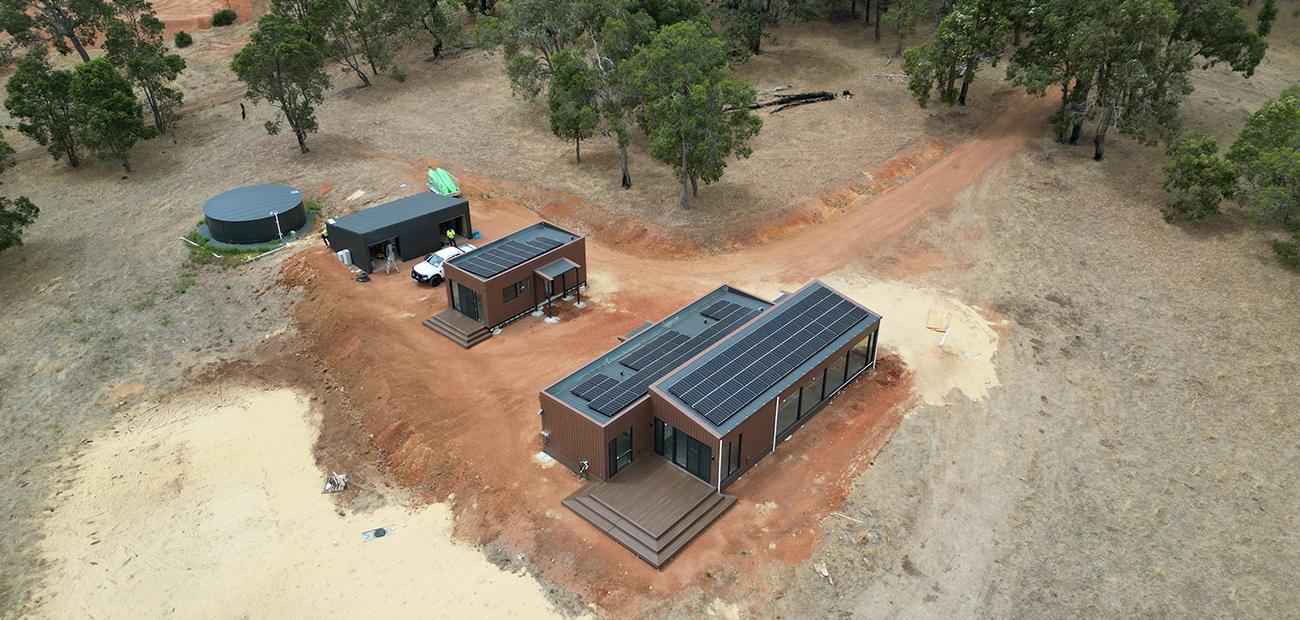
The short answer is yes — and Western Australia is one of the best places in the world to do it. We’ve been building modular homes for metro and regional WA for some time, and we get this question almost weekly. Here’s the honest version of the answer.
Reliable sunshine, plenty of space and a building style (modular) that’s already designed for remote sites make off-grid living more achievable here than almost anywhere else. But “achievable” isn’t the same as “simple”. Before you start dreaming about waving goodbye to your power bills, there’s a fair bit to weigh up.
Here’s a comprehensive look at what’s involved, what it costs and where the pitfalls hide.
Why modular suits off-grid living
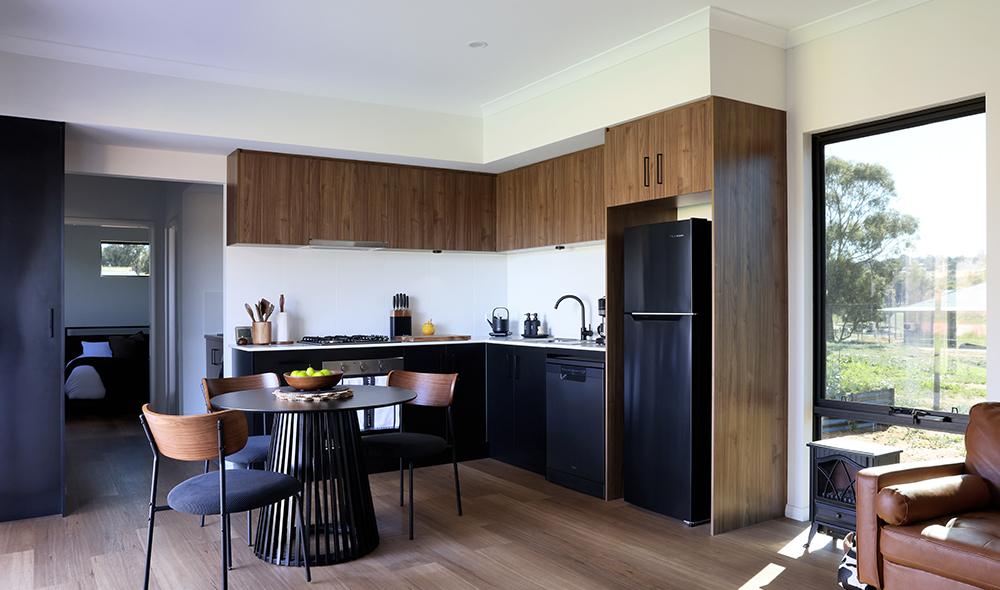
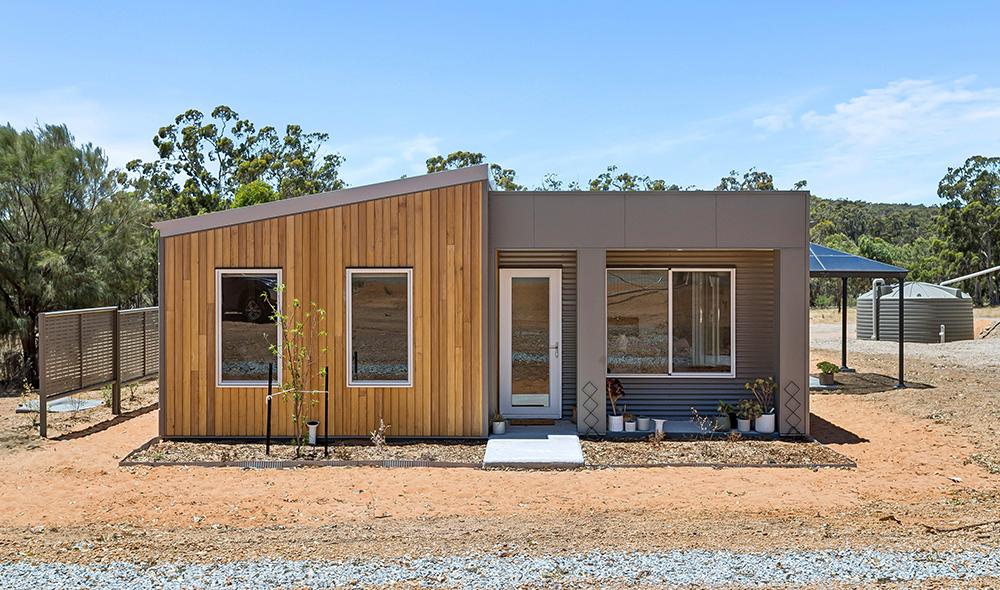
Fox Modular homes are built in a controlled factory environment and then transported to site. That gives them a few real advantages when you’re heading bush:
- Quality control: Insulation, sealing and energy-efficient design are baked in from day one. Our homes are framed in Australian-made TRUECORE® steel, which means a straight, stable structure that won’t twist or warp on a remote site. Off-grid living rewards a tight, efficient envelope – the less power you waste, the smaller (and cheaper) your solar system needs to be.
- Speed on remote sites: A traditional build in the Wheatbelt, South West, Mid West or Pilbara can drag on for months while trades drive in and out. A modular home arrives largely finished.
- Predictable costs: Remote builds are notorious for blowouts. Modular contracts are largely locked in before the home leaves the factory.
- Designed-in services: It’s easier to engineer solar, battery, water and wastewater systems into a modular home from the start than it is to retrofit them later.
In other words, the building itself is the easy bit. The off-grid systems are where the planning really matters.
Work the basics before you size the system. Orient the home for passive solar gain, plan eaves and shading for our hot WA summers, prioritise insulation and the right glazing, and choose a heat-pump hot water system and induction cooktop. Every watt you don’t have to generate saves battery capacity and dollars over the life of the home.
Can you actually go off-grid in WA?
Yes – and increasingly, people are choosing to, even when grid power is available. The reason is simple: getting Western Power, or Horizon Power if your block sits in the Mid West, Pilbara, Kimberley, Goldfields or Esperance, to extend the network to a remote block can be eye-wateringly expensive. Quotes of $30,000 to well over $200,000 are common for rural blocks more than a few hundred metres from existing infrastructure. Once you compare that to the cost of a quality off-grid system, the maths often tips the other way.
The catch? You’re now your own utility company. Power, water and wastewater all become your responsibility to design, install, maintain and replace down the track.
The four systems you'll need to plan

Power: solar + battery + backup
For most off-grid WA homes, the setup looks like this:
- Solar array: typically 6–15 kilowatts (kW) depending on household size and climate
- Battery storage: usually 15–30 kilowatt-hours (kWh) of lithium storage to cover nights and cloudy stretches
- Inverter/charger: the brain of the system
- Backup generator: diesel or Liquefied Petroleum Gas (LPG), for the rare run of overcast days (and peace of mind)
Expect a quality, properly sized system to land somewhere between $35,000 and $70,000 installed. Smaller homes can go lower; families running aircon, a pool pump and home offices will sit higher. WA’s sun does most of the work, but the system has to be sized for the worst week of the year, not the average.
The federal battery discount: a welcome bit of good news
The battery is usually the single biggest line item in that power budget, and it’s now a fair bit cheaper. Under the Australian Government’s Cheaper Home Batteries Program, households can get around 30% off the upfront cost of installing an eligible battery system between 5 and 100 kWh. Off-grid homes are included.
- You don’t apply for it: The discount is delivered through Small-scale Technology Certificates (STCs). Your installer takes it off the price, so it should show up on your quote rather than as a form you have to chase.
- Off-grid qualifies: Grid-connected batteries generally need to be virtual power plant (VPP) capable to be eligible. Off-grid systems don’t.
- It’s tiered by size: Since 1 May 2026, the first 14 kWh of usable capacity gets the full rate, capacity from 14 to 28 kWh gets less, 28 to 50 kWh gets less again, and nothing above 50 kWh attracts a discount. A typical 15–30 kWh off-grid battery still gets a solid saving.
- Timing matters: The discount is locked in by the date your battery is installed (when the electrical compliance certificate is issued), not the date you sign. It steps down every six months through to 2030, so check the current rate with your installer.
- The fine print: The battery has to be installed permanently at the property, and your installer needs to confirm the system meets the program’s requirements.
One honest word of advice: don’t undersize your battery to chase the higher rate on the first 14 kWh. An off-grid home has to get you through the worst week of winter, and a better rate per kWh won’t help when the batteries are flat. For the latest details, see the Cheaper Home Batteries Program page from the Department of Climate Change, Energy, the Environment and Water (DCCEEW).
Water: tanks and (sometimes) bores
Scheme water rarely reaches off-grid blocks. Most owners rely on a combination of:
- Rainwater tanks: usually 90,000–150,000 litres total capacity, sized to local rainfall
- Bore water: where groundwater is available and of acceptable quality
- Filtration and ultraviolet (UV) treatment: essential if you’re drinking tank or bore water
Budget around $8,000–$20,000 for tanks, pumps, plumbing and filtration. Bores add another $8,000–$25,000+ depending on depth and yield.
A critical thing to check early: average annual rainfall on your block and how it’s distributed. A property near Margaret River collects rainfall very differently to one near Kalgoorlie.
Wastewater: you’re on your own
You’ll need an on-site system and the Shire will need to approve it. The common options:
- Septic tank with leach drains: cheapest, but only suitable for certain soils and lot sizes
- Aerobic Treatment Unit (ATU): treats wastewater to a standard safe for surface irrigation – popular and increasingly required
- Worm farm systems: low-energy, low-chemical, but need the right conditions
Costs typically run $8,000–$20,000 installed, depending on system type and soil testing.
Communications
Often overlooked. Mobile coverage drops off quickly outside the major towns. Most off-gridders rely on Starlink (staring from $75 per month plus hardware) or a fixed-wireless National Broadband Network (NBN) tower if one’s in range. Where neither is available, NBN Sky Muster satellite is the fallback. Factor this into your monthly running costs.
The hidden extras
A few costs that catch people out:
- Site works and access: A modular home arrives on a truck. If your driveway can’t handle that truck, you’re paying to fix it. Add $5,000–$30,000+ for clearing, levelling and access if your site is tricky.
- Bushfire Attack Level (BAL) requirements: Much of regional WA is now assessed under bushfire planning rules. A high BAL rating means upgraded materials, ember-proofing, water reserves for firefighting and a noticeable bump in build cost.
- Shire approvals: Every WA Shire has its own quirks. Some are off-grid-friendly; others have minimum lot sizes, setbacks and effluent rules that can shape your design. Enquire early.
- Transport: Delivering a modular home to a block four hours from Perth costs more than one an hour away. Pilots, permits and long-haul transport add up.
- System maintenance and replacement: Batteries typically last 10–15 years. Inverters around 10. ATU pumps and UV bulbs need servicing. Build a sinking fund.
- Firefighting water reserve: in high BAL zones many WA shires require a dedicated static water supply (typically 10,000L+) with a DFES-compatible fitting. Build this into your tank sizing from the start.
- STC rebate: Small-scale Technology Certificates still apply to off-grid solar and can take a noticeable chunk off the upfront system cost. Your installer should factor this into the quote. Your battery can also attract STCs under the federal Cheaper Home Batteries Program (see above), so make sure your quote shows both.
So what does it really cost to live off-grid in WA?
As a rough rule of thumb, expect off-grid systems to add $70,000–$130,000 on top of your modular home and site works. That sounds steep until you compare it against a $150,000 grid connection quote and recognise your running costs from there are largely fuel, servicing and eventually replacement parts, not a quarterly bill. The federal battery discount and solar STCs can bring that number down again, so ask your installer to itemise both.
Things to think about before you commit
Off-grid living in WA is genuinely doable, and a modular home is one of the smartest ways to do it. The combination of an efficient, factory-built envelope and well-designed renewable systems can give you a comfortable, low-running-cost home in places the grid will never reach.
The key is planning it as a single system – house, power, water and wastewater – from day one, rather than bolting things on afterwards.
- How remote is the block, and how often will you really be there?
- What’s the rainfall and solar profile across the year?
- What’s the BAL rating, and how does that shape the build?
- Is the Shire supportive of off-grid living?
- Are you comfortable being your own utility manager, or do you want a system you can largely set and forget?
Thinking about an off-grid modular build?
At Fox Modular we design and build award-winning modular homes for metro and regional WA, including off-grid-ready homes for the South West, Wheatbelt, Mid West and beyond. Every home is backed by our 25 Year Structural Guarantee, and we offer three flexible building options: Full Service, Owner Builder, and Supply Only.
If you’d like to talk through what’s possible on your block, get in touch. Or, if you’d rather walk through a home first, our display village is open at 13 Boom Street, Gnangara. Bring questions and we’ll put the kettle on.
Build outside the box.
Photos courtesy of OffGridWA
RECENT POSTS